Tuesday, July 7, 2020

Frogs (蛙)


The frogs arrive with the new rice.  In fact, I think they may be some kind of amphibious hitchhikers.  Farmers get their flats of rice seedlings in mid-May and by the end of the month these are planted and growing in 10 centimeters of water.  The frogs, by some strange coincidence, begin singing at exactly the same time.

Where do they come from?

These frogs which inhabit the rice paddies are known as Japanese tree frogs (Dryophytes japonicus), which seems a bit of a misnomer.  The German-born British zoologist Albert Günther is responsible for their scientific name.  Who knows where the common name came from.  

I never see these frogs, not in the rice paddies, not in the trees, not sunbathing on the warm asphalt.  They are small (just over 3 centimeters) and mostly a dull beige color, which means they don't stand out.  But there are plenty of smaller creatures with better camouflage that I see.  Moths, for instance.  

In six years I have seen just one living frog.  (I have seen a few flattened in the road.)  This little guy climbed not a tree but a wall and made himself a home in my terrace garden three floors up.  He didn't do much, just sat there under my small pine tree like a Buddhist monk practicing zazen.  He stayed for a couple of months and in autumn disappeared.

While this breed of frog may keep a low profile during the day, they definitely make their presence known after hours.  Beginning around dusk they kick up quite a racket and don't really let up until dawn.  There must be hundreds of them, a sort of frog convention, everyone talking at once.

But where do they come from?

An early zoological discovery for many children is the tadpole - little fish that grow into frogs.  There are dozens of mini-canals that criss-cross Katsura, perhaps remnants of a more rural life here.  These may or may not connect to Katsura River; I've never been able to determine this.  Do the tadpoles come to the rice paddies by way of these crude aqueducts?

The frog convention is usually over by mid-July.  The rice paddies go quiet, peace returns to the night.

Where do they go?


Monday, June 8, 2020

would-be career

My acting/modeling career never really panned out in Japan.  In 2015 there was the Marie Ueda video, and the photo shoot with the Kimono Queen and...that was about it.  To be fair, I didn't pursue it with any passion.  I suppose I thought jobs would magically appear on my doorstep.

This 5-year work drought recently came to an end when my friends at be-kyoto gallery approached me about a new project.  They wanted to do an English language instruction video.  I thought, enh...I don't know.  I'm an artist, not an English teacher.  And there are a million English instruction videos out there.  Okay, I said, if we are going to do this, it has to be different - no classrooms or blackboards (or whiteboards!), no textbooks, exercises or quizzes.  

After mulling it over for several weeks the project began to take shape.  Let's make a super short film!  We had no budget so we would have to be creative using the gallery space, a wonderful 200-year-old machiya, and our own talents.  I wrote several short scripts and did some Monty Python-esque animation.  Uchiyama-san easily took the role of cinematographer.  Okamoto-san became the reluctant but charming leading lady.  And Okamura-san was brought in as editor and advisor on all things technical.  Shooting and editing took another several weeks.  Finally we ended up with this, a breezy sketch that doesn't take itself too seriously, but nonetheless hopes you learn some English (er…that is, if you don't already speak English):


Friday, May 8, 2020

Shinryoku (新緑)


There aren't official start and end dates for shinryoku (fresh green) in nature.  I suppose it depends on the severity of the past winter and the vigor of spring.  It's usually around the end of April / beginning of May that plants and trees really explode with life.  Their bony winter frames disappear, covered over by new leaves in brilliant, pulsating greens.  This can be seen anywhere, of course, but the magic and intensity of shinryoku is best experienced in or around a densely wooded mountainside.

As another Golden Week was drawing to a close I decided to pay the ever lovely Arashiyama a visit.  This year being anomalous, there were but a handful of people in Nakanoshima park on the south side of Togetsukyo Bridge.  I sat down on the river bank and admired the view.  The steep hills beyond the bridge were a painter's pallet of green, the furious labor of a mad artist who could not decide on a hue.  I've seen these hills a dozen times before, in every season, but this green…it drew me in, enveloped me.  I was spellbound.  I tried to look away, but my gaze always returned.

There is a lot of literature, scientific and otherwise, about the effects of the color green on the human body, and there are some reasonable assertions.  But regardless of the arguments, clever or ridiculous, there is no denying the great pleasure shinryoku brings as spring's personality shifts from coy to confident.


Tuesday, April 21, 2020

Let's get lost 2


I still like to get lost.  It's that chance of discovery.  Though after almost six years living in Katsura it's nearly impossible for me to get truly lost.  But I do like to try.  A nice long dérive is good for the mind and body.

It was the French philosopher Guy Debord who conceived la dérive (the drift) in 1956.  It is basically a long, aimless walk where the rover allows him or herself to "be drawn by the attractions of the terrain".  The dérive is closely linked to Debord's theory of urban exploration and pedestrian movement called psychogeography.  What is it in the landscape that guides us when we wander?  Why do we choose this street instead of that street?  Why do we turn left instead of right?  Note: following a coloured line on Google Maps with your smartphone is not a dérive.  You must free yourself of all conventions and just go.  Walk without purpose or destination.


I am fascinated by this idea.  And I've tried to make notes of my own walks.


What attracts me to a street: 
kawara roof tiles, aged shitami (wood siding), pre-Heisei (1989-2019) architecture, elegant modern architecture, water - rivers, streams, canals, narrow streets, streets that curve, gentle hills, lush greenery - trees, flowers, stone walls, bamboo fences 

What repels me from a street: 

large apartment blocks, high walls, contemporary plastic architecture, thoughtless or oppressive architecture, no greenery, wide streets, heavy automobile traffic, a barren wasteland, disrepairjunk, the profusion of asphalt and concrete, wire mesh fences

Sunday, April 5, 2020

Katsuragawa hanami (桂川 花見)


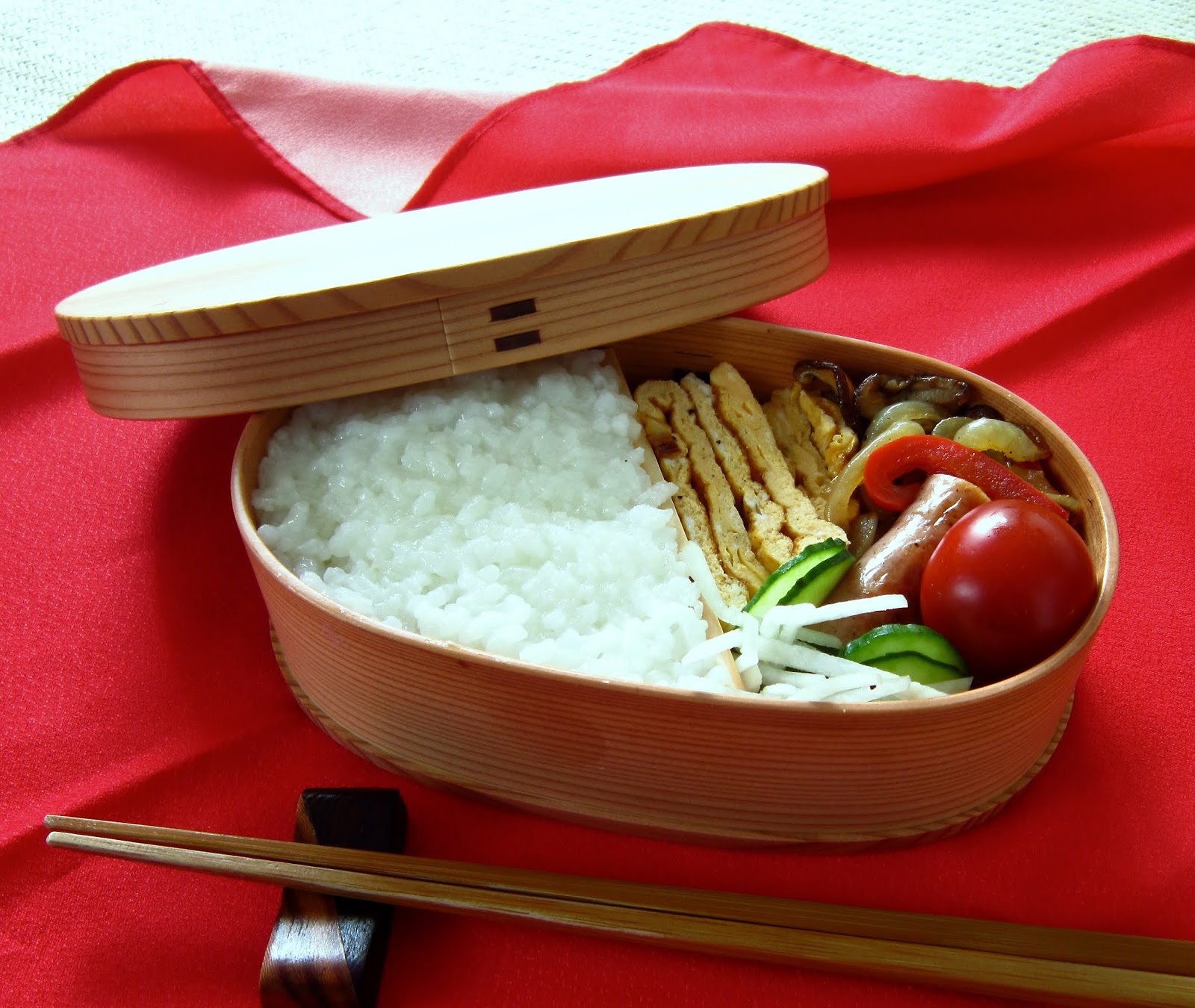
I packed a bento and headed out, following the river north-west from Katsura Bridge, my usual route.  A hazy sunshine blurred the distant mountains and warmed my bones.  The river spread itself wide in places.  A natural gesture or a man-made manipulation, I wasn't sure.  Its banks were spattered with yellow rapeseed. 

There's a graceful bend and great stony beach near Matsuo Taisha.  I stopped here for lunch beneath two ancient sakura.  The trees have probably known more beautiful surroundings given their age.  The thoughtless concrete slab upon which I sat a sort of insult to nature, an abomination.

A cool breeze plucked some of the lazier sakura blossoms from the trees.  They flipped and twirled and spun to the ground.  That was it.  The end of their performance.  Always too soon.  But next year, upon the same stage they'll put on another show, and we'll once again sit and wonder.


Friday, April 3, 2020

Sakura (桜)


Sakura pay no heed
boldly singing their song
through light and through gloom